
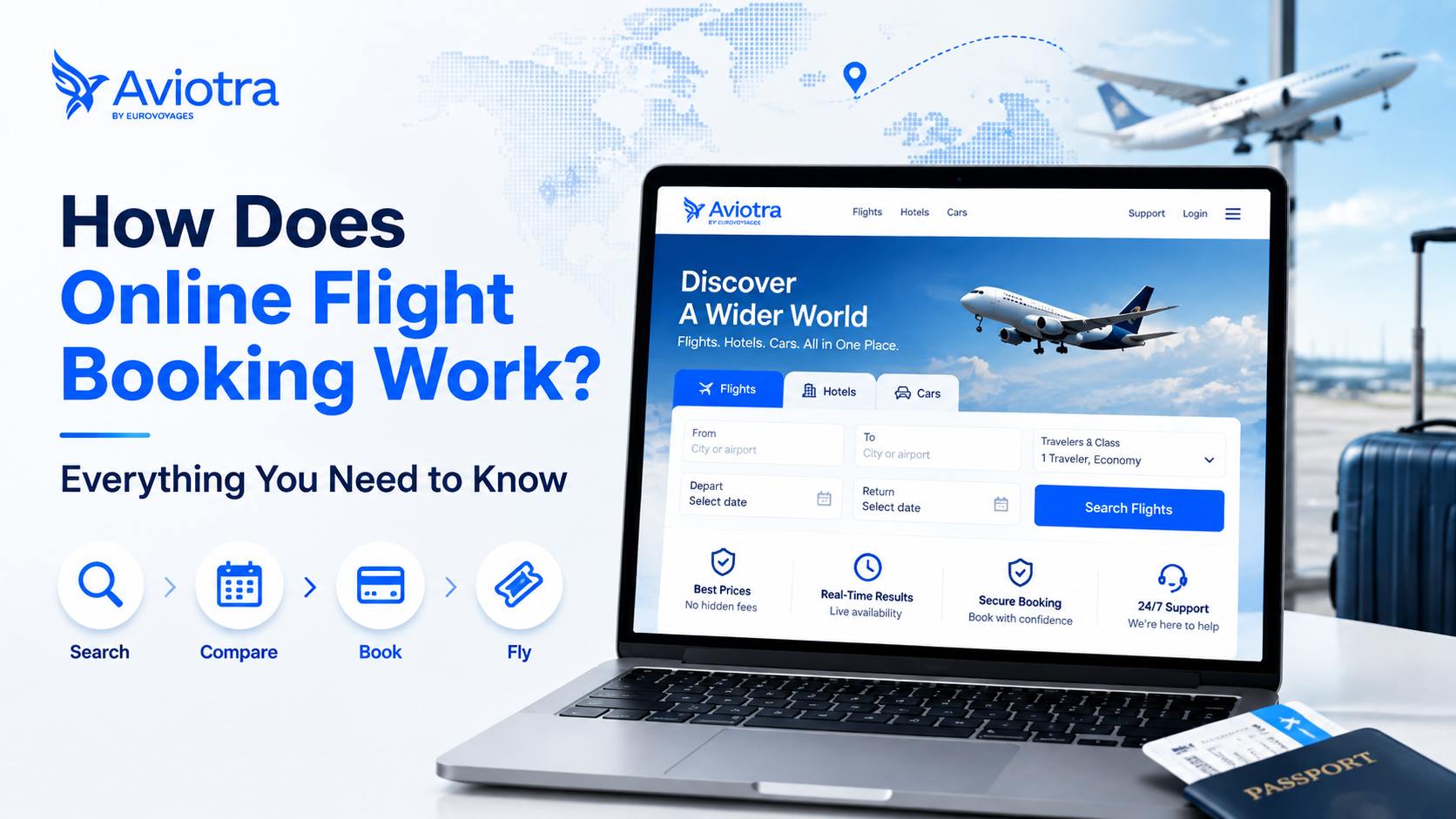
You find the right flight, click “Book,” enter your details, and receive a confirmation a few moments later. But what actually happens between searching for a flight and getting your ticket?
Behind that simple screen, multiple systems work together to check availability, process your reservation, confirm payment, and issue your ticket.
The online flight booking process starts with comparing routes, schedules, fares, baggage options, and ticket conditions. A digital flight booking platform such as Aviotra, Google Flights, or Skyscanner can help you review available options, while airlines such as Air Canada, WestJet, and Porter Airlines offer direct booking through their own websites and apps.
Once you select a flight, an online flight reservation system handles the reservation details and communicates with the booking and ticketing systems. Your Passenger Name Record (PNR) links your reservation details to the itinerary, while ticketing creates the electronic record for your purchased flight.
So, how does online flight booking really work from search to takeoff?
Understanding each step of booking a flight online can help you compare flights more carefully, spot extra costs, avoid common booking mistakes, and know exactly what happens after you click that booking button.
What Is Online Flight Booking?
Online flight booking is the process of searching for, comparing, and purchasing air travel through an airline website, travel platform, or Online Travel Agency (OTA).
An online flight reservation system connects different parts of the booking process, including flight schedules, fare information, availability, passenger details, and ticketing. The information displayed can depend on the airline, booking platform, route, and suppliers connected to the system.
There are two common ways to book flights online:
Book directly with an airline: Visit an airline's website or app, such as Air Canada, WestJet, or Porter Airlines, select your flight, and buy directly from the carrier.
Book through an OTA or flight booking platform: Use a platform such as Aviotra or Expedia to compare and book available flights from different airlines in one place.
Search and comparison services work slightly differently. Google Flights and Skyscanner, for example, are primarily used to search and compare flight options. Depending on the result, you may be directed to an airline or another booking provider to complete your purchase.
The Step-by-Step Online Flight Booking Process
Booking flights online becomes much easier once you understand the main stages involved. While the exact screens and terminology vary between platforms, most bookings follow a similar process.
Step 1: Search for Flights
Start by entering your trip details.
Choose where to search: You can search through an airline, OTA, or digital flight booking platform such as Aviotra. Comparison services such as Google Flights and Skyscanner can also help you review available options.
Enter your travel details: Provide your departure city, destination, travel dates, number of passengers, and trip type (one-way, round-trip, or multi-city).Compare flights: Check departure and arrival times, total journey duration, stops, baggage allowances, cabin class, and total fare.
Review the fare conditions: Check whether the ticket can be changed or cancelled and what fees or restrictions apply before making your selection.
Step 2: Select Your Flight and Enter Passenger Details
After choosing a flight, you will need to provide information for each traveller.
Select the flight: Review the itinerary carefully, including the airports, dates, times, connections, and fare type.
Enter passenger information: Use the traveller's name and other required information exactly as requested by the airline or booking provider. For international travel, make sure the name matches the travel document you will use.
Provide contact details: Add an email address and phone number so the airline or booking platform can send booking updates and other important information.
Add optional services: Depending on the airline and fare, you may be able to select seats, purchase baggage, add special services, or provide a frequent-flyer number.
Take your time at this stage. Correcting passenger information after ticketing can sometimes involve restrictions or additional fees.
Step 3: Review the Booking and Pay
Before making payment, review the entire itinerary one more time.
Check:
Passenger names
Travel dates
Departure and arrival airports
Flight times
Number of connections
Baggage allowance
Seat selection
Fare conditions
Cancellation and change rules
Total price, including applicable taxes and fees
Once everything is correct, proceed to payment using one of the methods offered by the airline or booking platform.
After successful payment and ticketing, you should receive a booking confirmation and electronic ticket information. Timing varies depending on the provider, payment method, and booking circumstances.
Step 4: Receive Your Booking Confirmation
Your reservation will include a booking reference, commonly called a Passenger Name Record (PNR) or confirmation code. A PNR is a reservation record containing information about your trip, such as passenger details and your itinerary. The electronic ticket is a separate ticketing record confirming the purchase and travel entitlement.
Your confirmation may include:
Booking reference or PNR
Passenger names
Flight numbers
Departure and arrival details
Ticket information
Baggage details
Fare conditions
Payment or transaction information
Instructions for managing the booking
Save these details somewhere accessible. You may need them when checking in, changing your reservation, contacting the airline, or accessing your itinerary.
Step 5: Check In and Prepare for Departure
Online booking is only the beginning of your journey. Before departure, check the airline's online check-in instructions.
Check-in opening times vary by airline, airport, route, and other circumstances, so do not assume every airline follows the same schedule. After you check in, you may receive a digital boarding pass or instructions for obtaining one at the airport.
How Travel Technology Supports Online Flight Booking
The Airline Industry relies on Travel Technology to manage flight schedules, fares, availability, reservations, and ticketing. Global Distribution Systems (GDS) connect airlines with travel agencies and booking platforms, making flight information available across channels.
Sabre Corporation and Amadeus IT Group are major travel technology providers supporting airline reservations, inventory, and ticketing. The International Air Transport Association (IATA) also develops industry standards that support areas such as ticketing and airport identification.
When you search for a flight, these systems work behind the scenes to retrieve available options and process your reservation. The specific systems involved depend on the airline and booking platform.
Is It Safe to Book Flights Online?
Booking flights online is now standard in air travel. Still, travellers should take a few precautions before entering personal or payment information.
Here’s what you can do to have a much safer and more comfortable online flight booking experience:
#1 - Use a Trusted Website
Check that you are using the official airline website or a reputable booking platform. Be cautious of websites that imitate well-known airlines or offer unusually low fares without clearly explaining the booking conditions.
#2 - Check the Website Address
Before entering payment information, make sure you are on the correct website and that the connection is secure. A secure connection matters, but it shouldn't be the only factor you use to decide whether a website is legitimate.
#3 - Review the Full Price
Look beyond the initial fare. Check taxes, baggage charges, seat fees, service fees, and other applicable costs before completing the booking.
#4 - Keep Your Confirmation
Save your booking reference, ticket information, itinerary, and payment confirmation. Keeping these records makes it easier to manage your trip later.
#5 - Be Careful With Unusually Low Fares
A fare that appears significantly lower than other options deserves a closer look. Confirm the airline, itinerary, baggage allowance, fare conditions, and final price before paying.
6 Common Mistakes to Avoid When Booking Flights Online
The online travel booking process is relatively simple, but small mistakes can create problems later.
Mistake #1 - Entering Passenger Names Incorrectly
Check every passenger's name before paying. For international travel, compare the information with the travel document you intend to use. Name corrections may be subject to airline or booking-provider rules.
Mistake #2 - Focusing Only on the Base Fare
The cheapest fare is not necessarily the lowest overall cost. Check baggage, seat selection, meals, change restrictions, and other applicable charges.
Mistake #3 - Choosing an Unrealistic Connection
A short connection can look attractive when comparing fares, but it may leave little time to change gates, clear required procedures, or deal with delays. Review the full itinerary before booking.
Mistake #4 - Ignoring Fare Conditions
Read the rules attached to the ticket. Some fares have strict restrictions, while others offer greater flexibility for changes or cancellations.
Mistake #5 - Forgetting Travel Documents
For international trips, check passport, visa, and entry requirements before booking or well before departure. Requirements vary by destination and can change.
Mistake #6 - Losing Your Booking Information
Keep your PNR, confirmation number, itinerary, and ticket information in an easy-to-access location.
Incredible Tips for Easier Online Flight Booking Experience
A few smart booking habits can help you compare flights, avoid common mistakes, and make the process easier to manage.
Compare multiple dates: If your schedule is flexible, check nearby departure and return dates. Small changes can sometimes change the fare.
Compare the total cost: Look at the fare plus baggage, seat selection, and other services you actually need.
Read the fare rules: Know the change, cancellation, refund, and baggage conditions before payment.
Check the airport: Confirm the exact departure and arrival airport, especially when travelling to a city served by multiple airports.
Save your booking reference: Keep your PNR and confirmation details available throughout your trip.
Review your itinerary after booking: Check the confirmation as soon as you receive it, and contact the booking provider if anything looks incorrect.
Check the airline's instructions: Before departure, review check-in times, baggage requirements, and airport procedures for your specific flight.
Consider price alerts: Some flight search services offer price tracking or alerts that can help you monitor fares over time.
What to Do If Your Flight Changes or Gets Cancelled
Airline schedules can change after you book. Delays, cancellations, and schedule changes may affect your itinerary, so check your email and booking account for updates.
If the airline changes or cancels your flight:
Review the updated itinerary: Check the new flight time, connection details, and airports.
Check your available options: Depending on the circumstances and the airline's applicable policy, you may be offered rebooking, a refund, or another option.
Contact the right provider: If you booked directly with the airline, start with the airline. If you booked through an Online Travel Agency (OTA) such as Aviotra, the booking provider may need to help change the reservation.
Check applicable passenger rights: For flights covered by Canadian air passenger protection rules, your rights can depend on the reason for the disruption and other circumstances.
Keep your records: Save your original itinerary, updated booking details, and communications relating to the change or cancellation.
Don't assume every cancellation or schedule change has the same outcome. Your options can depend on the airline, fare, route, cause of the disruption, and applicable regulations.
Frequently Asked Questions
Is it cheaper to book directly with an airline or through an OTA?
No single option is always cheaper. Airlines, OTAs, and comparison services may display different fares, fare conditions, or available options. Compare the total price and terms before deciding.
What is a PNR?
A Passenger Name Record, or PNR, is a reservation record associated with a passenger's trip. It can include passenger information, itinerary details, and booking-related information. Your booking reference allows the airline or booking provider to locate your reservation.
Can I book a flight online without creating an account?
Some airlines and booking platforms allow guest bookings, while others may encourage or require an account for certain services. Check the platform's booking process before you begin.
What information do I need to book a flight online?
You will generally need your travel dates, departure and destination cities, passenger information, contact details, and a valid payment method. International travellers may also need passport or other travel-document information, depending on the airline and destination.
Is an online flight booking confirmed immediately?
Not necessarily. After you submit payment, the booking may need to be processed and ticketed before it is fully confirmed. Always wait for the booking confirmation and ticket information rather than assuming that a payment attempt automatically means your ticket has been issued.
Conclusion
Online flight booking involves several steps, from searching available flights and comparing fares to entering passenger details, making payment, and receiving your ticket. Paying attention to each stage can help you avoid costly errors and ensure the itinerary suits your travel needs.
Online flight booking platforms such as Aviotra simplify the process by bringing flight options, schedules, fares, and booking details into one place. This gives travellers an easier way to explore options and complete reservations without navigating multiple airline websites.
Before you confirm a booking, check the final price, baggage allowance, passenger details, connection times, and ticket conditions. Taking a few extra moments to review these details can prevent issues later and help you book your next flight through Aviotra more easily.
 How Aviotra Helps You Plan Flights, Hotels, And Car Rentals In One Place
 Why Canadians Are Choosing Online Travel Platforms for Trip Planning?
 Best Websites To Book Flights In Canada
